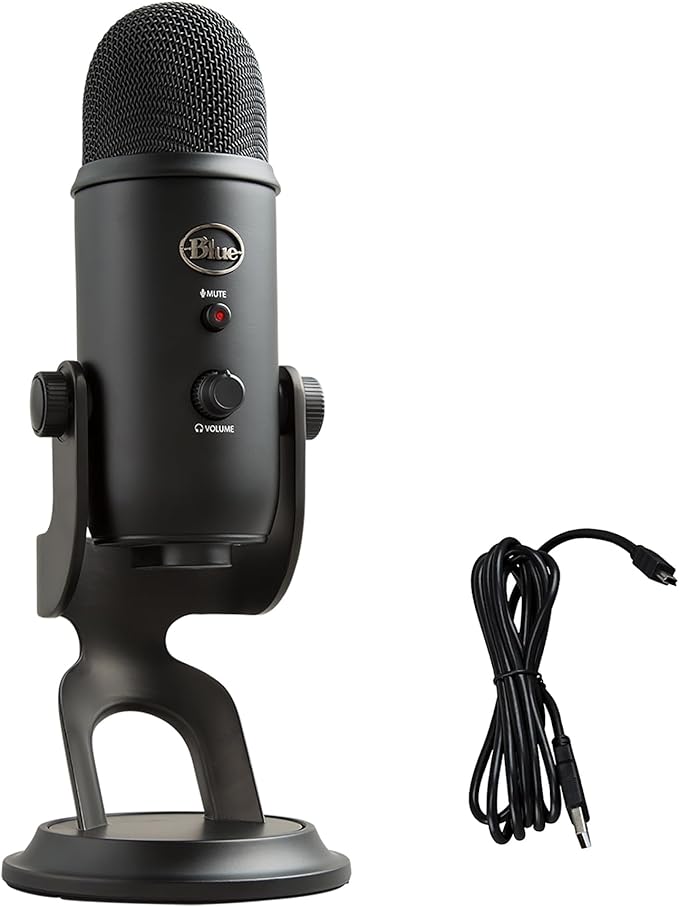


Blue Yeti USB Microphone for PC, Mac, Gaming, Recording, Streaming, Podcasting, Studio and Computer Condenser Mic with Blue VO!CE Effects, 4 Pickup Patterns, Plug and Play - Blackout
**Blue Yeti USB Microphone Review: The Content Creator's Swiss Army Knife**
Walk into any serious content creator's studio and you'll likely spot the unmistakable silhouette of a Blue Yeti microphone. This iconic USB condenser mic has earned its place as the default recommendation for anyone stepping up from headset microphones to professional audio recording. But with countless competitors flooding the market at various price points, does the Blue Yeti still deserve its crown as the go-to microphone for podcasters, streamers, and remote workers?
**Product Features and Specifications**
The Blue Yeti distinguishes itself through its unique tri-capsule array design, enabling four distinct pickup patterns that typically require multiple microphones to achieve. Cardioid mode focuses on sound directly in front, perfect for solo podcasting or streaming. Omnidirectional captures sound from all angles, ideal for conference calls or recording group conversations. Bidirectional picks up from front and back, excellent for interviews, while stereo mode creates a realistic sound image for musical recordings or atmospheric audio capture.
Build quality immediately impresses when unboxing this hefty microphone. Weighing in substantially heavier than expected, the all-metal construction feels bulletproof compared to plastic competitors. The included desktop stand provides solid stability, with the microphone pivoting smoothly to find optimal positioning relative to your sound source. Standing nearly a foot tall when fully extended, it commands presence on any desk, though it cleverly folds down for more compact storage.
Onboard controls put essential functions at your fingertips without diving into software menus. A large volume knob on the front adjusts headphone monitoring levels, while the rear houses the gain control and pattern selection dial. The prominent mute button on top glows red when activated, providing instant visual confirmation that prevents those embarrassing hot-mic moments during video calls. The zero-latency headphone monitoring jack lets you hear yourself in real-time without the disorienting delay common with software monitoring.
Setup truly lives up to the plug-and-play promise. Windows and Mac systems recognize the microphone instantly without driver installation, though the optional Blue VO!CE software unlocks additional effects and enhancements for those wanting to fine-tune their sound. The microphone connects via the included USB to micro-USB cable, drawing all necessary power through the connection without requiring phantom power or additional equipment.
**What Customers Are Saying**
Users consistently rave about the dramatic improvement in audio quality compared to gaming headsets or budget microphones. Many report receiving compliments on their voice clarity during calls, with one reviewer humorously noting a client asked about the bird they were keeping, which turned out to be outdoor birdsong picked up by the sensitive capsule. This sensitivity proves both blessing and curse, as the microphone captures rich, detailed audio but also picks up keyboard typing and desk vibrations without proper isolation.
The versatility of pickup patterns earns widespread praise, with creators appreciating the flexibility to switch between solo recording and group sessions without additional equipment. The stereo mode particularly impresses musicians and ASMR content creators who value spatial audio recording. Users report maintaining excellent sound quality even when positioned further from the microphone than typical, eliminating the need to hover inches from the capsule like cheaper alternatives require.
Build quality receives unanimous approval, with many expressing surprise at the substantial weight and solid construction. However, the connection point between microphone and stand emerges as a weak link, with multiple users reporting it loosens over time, causing unwanted rotation. Many recommend upgrading to a boom arm or shock mount for professional use, treating the included stand as a starter option.
Some technical quirks surface in reviews. The older micro-USB connection feels dated in an era of USB-C everything, and occasional software glitches require system restarts to restore proper function. The front volume knob strikes some as slightly fragile compared to the robust construction elsewhere, though actual failures seem rare.
**Who Should Buy This**
The Blue Yeti perfectly suits content creators ready to graduate from headset microphones but not quite ready for XLR interfaces and professional studio equipment. Podcasters, YouTubers, and Twitch streamers will appreciate the broadcast-quality audio without the complexity of professional setups. Remote workers conducting frequent video calls benefit from the dramatic improvement in voice clarity, potentially advancing their professional image.
Canadian musicians working in home studios find value in the stereo recording capability for demos and acoustic instruments. The multiple patterns make it versatile enough for various recording scenarios without purchasing multiple microphones.
**Final Verdict**
The Blue Yeti remains a benchmark USB microphone for good reason. While newer competitors offer specific advantages in certain areas, few match the Yeti's combination of sound quality, versatility, build quality, and ease of use at this price point. The microphone delivers professional results that satisfy hobbyists and semi-professionals alike, with enough headroom to grow into more demanding applications. Minor annoyances like the stand connection and dated USB standard pale against the core achievement of democratizing broadcast-quality audio recording. For Canadian content creators seeking their first serious microphone investment, the Blue Yeti continues to represent outstanding value that justifies its legendary status.
As an Amazon Associate, we earn from qualifying purchases.